
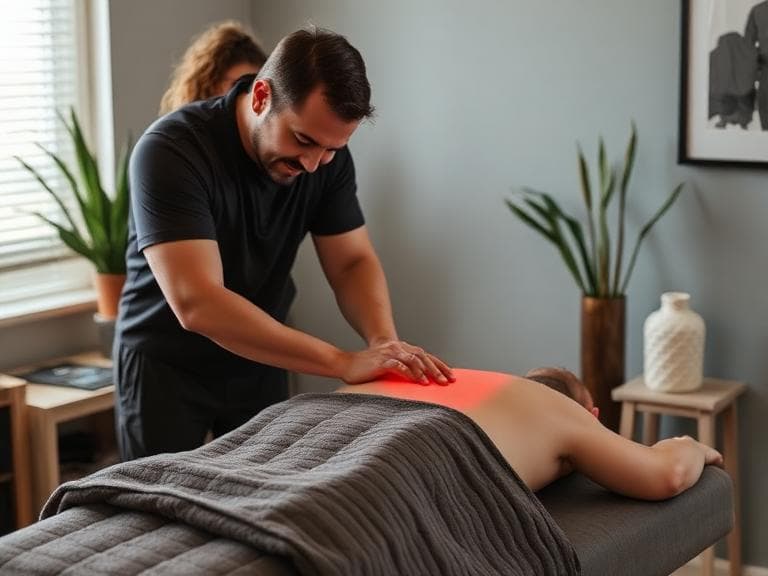
Massage may help some people manage muscle tension, guarding and movement discomfort that sit beside chronic pain. It is not a cure for every pain source. The useful question is not whether massage is good or bad; it is what role it should play in a wider plan.
What is pain-management massage?
This is massage therapy planned around a pain problem rather than a general relaxation visit. The therapist reviews symptoms, health history, painful areas, movement limits and goals, then adjusts technique and pressure. Medical assessment should come first when symptoms do not fit straightforward muscle care.
Where massage may fit
- Neck, shoulder or back muscle tension
- Guarding around an assessed joint or nerve problem
- Overuse or training-related muscle soreness
- Stress-related tension patterns
- Movement discomfort during recovery from an assessed strain
- A relaxation goal that supports rest and pacing
Techniques used in a session
A therapist may use lighter relaxation work, focused deep-tissue pressure, trigger-point work, myofascial techniques, stretching or movement. These labels describe methods, not separate promises. Pressure should stay within an agreed range and change when pain feels sharp, numb or unsafe.
How massage may help
Massage may reduce muscle guarding or tenderness and make movement feel easier for a time. It can also provide a calm setting to notice which positions and activities change symptoms. Evidence for long-term benefit is less certain, so response and function should be reviewed rather than assuming regular massage is always needed.
What happens during the first visit?
The therapist asks about the pain pattern, diagnoses, medicine, surgery, pregnancy and recent health changes. You agree on areas to treat, clothing and draping, position and pressure. The therapist checks in during treatment and reviews the response before suggesting another visit.
Where massage falls short alone
Massage does not treat every source of nerve pain, fracture, infection, inflammatory disease or serious injury. Relief that fades quickly may mean the main driver still needs movement rehabilitation, medical treatment, work changes, sleep support or another kind of care.
Massage compared with other pain care
Exercise-based rehabilitation may fit when strength, confidence or movement control is the main need. Osteopathic manual therapy puts more weight on joint movement. Medical care fits when symptoms suggest a joint, nerve or systemic problem. Psychological support can help with sleep, stress, pacing and the impact of long-term pain. More than one approach may be useful when roles are clear.
Aftercare and tracking results
Mild tenderness can occur after firmer work. Follow the therapist's advice, move gently and report symptoms that are severe or worsening. Track sleep, activity and function, not only the pain score. If several visits do not create a useful change, reassess the plan.
Coverage and choosing a provider
Confirm the provider's designation, current fee and your benefit-plan rules before booking. Ask about experience with your condition and whether the therapist will refer for medical assessment when the pattern is outside massage care.
Quick answers
Can massage help sciatica?
Massage may help nearby muscle guarding, but sciatica describes nerve symptoms and may need medical or rehabilitation assessment. It does not remove every cause of nerve irritation.
How often should I book?
There is no fixed schedule. Base frequency on the goal, response, cost and wider plan. Reassess rather than continuing when function is not improving.
Should deep tissue massage hurt?
It may feel strong, but sharp pain, numbness or bracing is a reason to reduce pressure or stop. Stronger treatment is not automatically better treatment.
Is massage covered?
Coverage depends on provider designation, service and plan rules. Confirm eligibility, referral needs and current billing options before treatment.