
Contact Us
Call the clinic, email, or send a note.
Send Us a Message
Back Pain Specialist in Edmonton
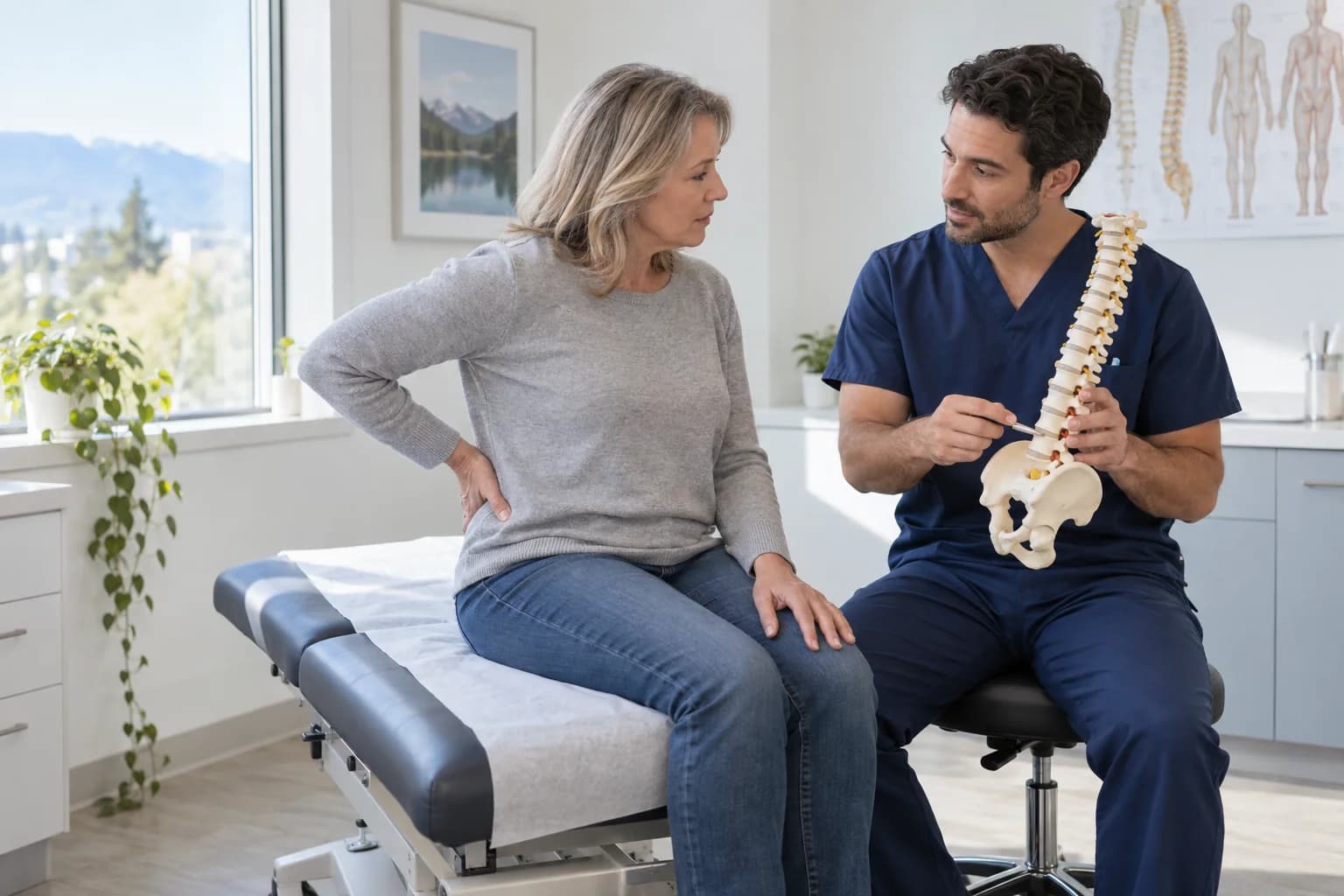
Back pain specialist care starts with a medical history and a physical exam of the back and spine. Solis reviews pain, movement, nerve symptoms and warning signs before discussing tests, rehab, medicine, injections or referral.
Why Choose Solis for Back Pain Treatment?
Integrated Care
Multiple treatments in one place for pain and wellness support.
Advanced Treatments
Modern therapies designed to support comfort, mobility and recovery.
Patient Focused
Personalized care focused on long term relief and well being.
Common causes and patterns of back pain
- Muscle strain and guarding
- Joint or arthritis-related pain
- Disc-related back or leg pain
- Sciatica and other nerve irritation
- Pain after an assessed injury
- Work, lifting or activity-related flare-ups
- Pain made worse by long sitting or one position
- Persistent pain with more than one cause
Lower back pain and sciatica
Lower back pain is the most common reason people book a back assessment. It can come from strained muscles, stiff joints, a disc or an irritated nerve, and often more than one at a time.
Sciatica is pain that travels from the lower back or buttock down the leg, sometimes with tingling or numbness. It usually means a nerve root is irritated. The exam checks strength, feeling and reflexes in the legs to see which nerve is involved and how much.
Care for lower back pain and sciatica often starts with staying active within safe limits and guided rehab. Physiotherapy and chiropractic care are both available at Solis, and the physician can add medicine review or a nerve-directed procedure when the exam supports it.
What a spine and back assessment looks for
The physician asks when the pain began, where it travels, what positions change it, how it affects sleep and function, and what treatment you have tried. The exam may check movement, strength, sensation, reflexes and signs that point to a muscle, joint, disc or nerve pattern.
An X-ray or MRI is not needed for every case. Testing is most useful when the result could change treatment, when symptoms are not following the expected course, or when the history and exam show a concern that needs more investigation.
Treatment options after the assessment
The plan may include staying active within safe limits, guided rehab, work or lifting changes, medicine review, massage or myofascial care, trigger point injections, a nerve-directed procedure, or referral for another opinion. Surgery is not the first step for most back pain, but urgent or surgical referral is sometimes the right step.
Acute pain and long-term pain may need different pacing. The plan should name what is being tried, what change to watch for, and when to review it. If a treatment is not helping, the answer is to reassess, not repeat it without a reason.
When back pain needs urgent care
Go to an emergency department for new trouble controlling or emptying your bladder or bowels, numbness around the genitals or buttocks, new severe weakness in both legs, or back pain after major trauma. These can be signs of a serious nerve or spine problem.
Seek prompt medical advice for fever, unexplained weight loss, a history of cancer, pain that is quickly worsening, or pain with new numbness or weakness. A routine clinic booking is not a substitute for emergency care.
Acute, chronic and recurring back pain
A new strain often needs time, sensible movement and a gradual return to usual activity. Pain that lasts or keeps returning deserves a review of the diagnosis, daily demands, sleep, strength and the treatments already tried. Duration alone does not identify the cause.
Prevention is usually practical rather than perfect: vary long-held positions, build activity gradually, use lifting strategies that fit the task and keep up the movement plan that helped. A flare is a reason to adjust and reassess, not proof that every activity is harmful.
Your visit, step by step
- 01
Tell the story
Review the start of the pain, injury history, work and activity, sleep, leg symptoms and treatment tried so far.
- 02
Physical exam
The physician checks comfortable movement and looks for muscle, joint and nerve signs. The exam is adjusted if pain is severe.
- 03
Explain the pattern
You hear what the findings may mean, what remains uncertain and whether imaging or another test would change the plan.
- 04
Choose a next step
Start the safest useful option, set a review point and know which changes should lead to urgent care.
Who this is for, and who it isn't
A good fit if
- Back pain that lasts or keeps returning
- Pain travelling into a buttock or leg
- Pain limiting work, sleep, walking or daily tasks
- A new flare in a person with a known back condition
Probably not, if
- New bladder or bowel changes, saddle numbness or severe leg weakness — go to emergency care
- Major recent trauma with severe pain — seek urgent assessment
- Anyone seeking a guaranteed injection before an exam
Visit the West Edmonton clinic
The clinic is on 118 Avenue in West Edmonton. People visit from Edmonton and the surrounding areas. Tell the clinic if driving, stairs or sitting makes your pain worse. That can help staff plan a safer visit and give you useful arrival details.
Frequently asked questions
Do I need an X-ray or MRI first?
Not always — most back pain is diagnosed by history and examination. If imaging will change the plan, the physician will order it.
Do you just prescribe painkillers?
Medicine is one option. The plan may also use movement, rehab, manual care, a targeted procedure or referral, depending on the findings.
How soon can I be seen?
Availability changes. Call or use online booking to ask about the next back-pain assessment.
When should I go to emergency for back pain?
Go for new bladder or bowel changes, numbness around the genitals or buttocks, severe weakness in both legs, or severe symptoms after major trauma.
Can back pain be treated without surgery?
Many back-pain plans start without surgery. The right path depends on the cause, neurological signs, response to care and whether any urgent finding is present.
Do I need a spine specialist or a back pain doctor?
Most people start with a back pain assessment. A Solis physician examines the back and spine first. If the findings point to a problem that needs a spine surgeon or another specialist, you are referred.
Do you treat lower back pain and sciatica?
Yes. The assessment looks at where the pain starts, whether it travels down the leg and which nerve may be involved. The plan may use rehab, physiotherapy, chiropractic care, medicine review or a nerve-directed procedure.