
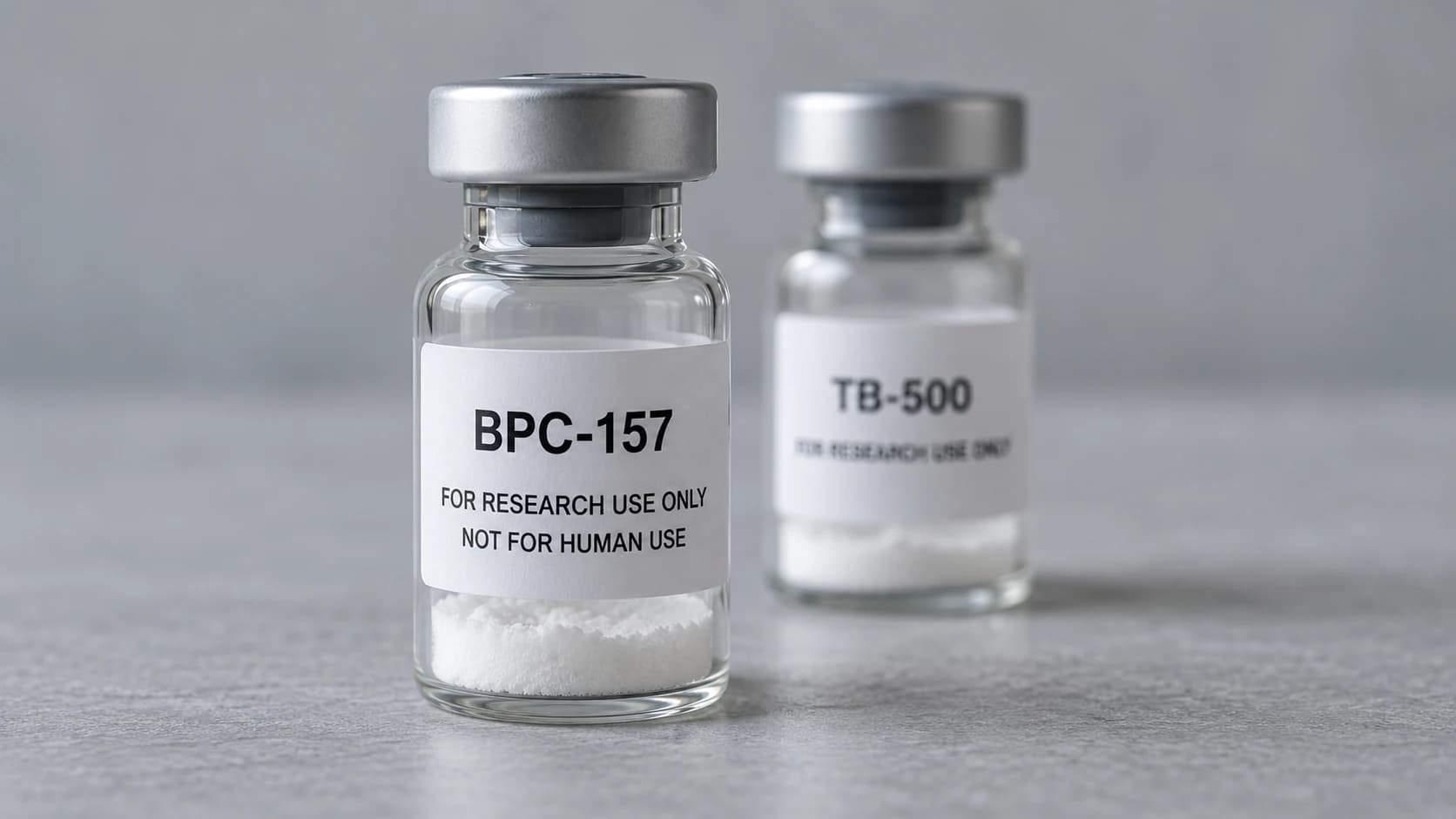
Peptides are short chains of amino acids. Unauthorized injectable products are sold online for weight loss, muscle growth, injury recovery and anti-aging. Health Canada regulates injectable peptides as drugs.
Some peptides are approved medicines. Insulin, semaglutide (Ozempic, Wegovy) and tirzepatide (Mounjaro, Zepbound) are peptide drugs that doctors prescribe for specific conditions.
Key takeaways
- Unauthorized injectable peptides are illegal to sell in Canada. Health Canada has not checked them for safety, effectiveness or quality.
- A "research use only" label does not make a peptide legal to sell.
- Authorized prescription drugs carry an 8-digit Drug Identification Number (DIN). Check the number in Health Canada's database or ask a pharmacist.
- Do not use unauthorized injectable peptides. If you have used one and feel unwell, get medical advice right away.
What did Health Canada and CPSA say about peptides in 2026?
Health Canada issued a public peptide warning on April 9, 2026, titled "Think twice before injecting peptides bought online." The advisory names seized products, including BPC-157, CJC-1295, ipamorelin, TB-500, GHK-Cu and retatrutide. Health Canada works with the Canada Border Services Agency (CBSA) to stop these shipments.
The College of Physicians & Surgeons of Alberta (CPSA) issued its own peptide warning the same day. CPSA encourages Alberta doctors to ask patients about injectables bought online, explain the risks and report side effects to Health Canada.
CPSA returned to the topic in its October 2026 Prescribing Companion. It explains the difference between unauthorized products and authorized peptide medicines, and gives doctors guidance on checking products and counselling patients.
Peptide seizures and court orders in Canada and Alberta
On June 11, 2026, the Superior Court of Québec granted Health Canada a permanent injunction that bars Canlab Research from selling unauthorized injectable peptides in Canada. In Alberta, Health Canada seized more than two dozen unauthorized peptide products from the Optimum Wellness Centre in Calgary in April 2025. Health Canada lists each peptide advisory in its Recalls and Safety Alerts database.
Is BPC-157 legal in Canada?
No injectable BPC-157 product is authorized for sale in Canada. Health Canada guidance updated October 23, 2026 states that injectable peptides are always regulated as drugs, never as natural health products. In May 2026, Health Canada also named BPC-157 powder an unauthorized drug ingredient.
Injectable TB-500 products are also unauthorized. Human research on BPC-157 is very limited. A 2025 pilot study involved only two adults. Its safety and effectiveness have not been established.
What does "research use only" mean on a peptide?
Sellers of research peptides often label vials "For Research Use Only" or "Not for Human Consumption." Health Canada states that this wording does not make a product legal or exempt from drug rules.
How to check a DIN
Look for an 8-digit DIN on the label of an injectable drug advertised for sale in Canada. Search the number or drug name in Health Canada's Drug Product Database. Check that the product name, strength and manufacturer match the label. Ask a pharmacist if you cannot confirm the record.
What are the risks of unauthorized injectable peptides?
Health Canada lists hormone imbalance, mood swings, blood sugar problems, liver or kidney damage, blood clots and growth of cancerous tumours as risks of unauthorized peptide drugs. Infections and allergic reactions can follow any injection of a product that is not sterile.
CPSA's October 2026 companion notes that Canada has no reliable population data showing how often these harms occur. Reports of serious reactions show what can happen, but cannot tell us each person's risk.
Contamination and dosing errors
Unauthorized peptides can contain too much, too little or none of the listed ingredient. Health Canada warns they may also contain solvents, heavy metals, glass or plastic particles, bacteria and endotoxins. Endotoxins are bacterial toxins that can cause fever, chills and septic shock.
The University of Calgary's April 20, 2026 toxicology bulletin cites a 2018 Belgian study that found purity between 5% and 75% for some tested peptide types, and arsenic at up to 10 times the international limit for injectable drugs. These findings do not tell us how common contamination is in Canada.
Mixing and measuring powders at home can lead to dosing errors. The Calgary bulletin describes a man who injected a peptide mix at 10 times the intended dose, then developed vomiting, muscle pain and dark urine.
A 2024 case report in the Journal of Emergency Medicine described compartment syndrome, a dangerous pressure build-up in a muscle, that needed surgery after a peptide mix was injected into the thigh.
CJC-1295 and ipamorelin side effects
CJC-1295, ipamorelin and tesamorelin push the body to release more growth hormone. The University of Calgary team lists swelling, joint pain, carpal tunnel syndrome and high blood sugar as side effects of this group.
Even prescribed tesamorelin can raise diabetes risk. The U.S. prescribing information for Egrifta SV reports diabetes-range blood test results in 5% of participants given tesamorelin and 1% given placebo over 26 weeks. These trials involved adults with HIV-related fat changes, so the figures do not describe all peptide users.
IGF-1 LR3 and hypoglycemia
IGF-1 LR3 is a lab-made form of insulin-like growth factor 1. The University of Calgary team flags severe hypoglycemia (low blood sugar) as a concern with its use.
GHK-Cu injection dangers
GHK-Cu is a copper peptide used in skin creams. The University of Calgary team notes that the peptide itself showed low toxicity in lab studies. The concern with large injected doses is copper overload, which has caused kidney, liver and blood damage after injections of a related compound, copper glycinate.
Fake GLP-1 drugs and retatrutide
Health Canada warned in January 2026 about fake GLP-1 drugs sold as Ozempic or Mounjaro. Retatrutide, an investigational weight-loss drug, is not authorized in Canada. A June 2026 alert from Victoria, Australia reported six cases of liver injury linked to unapproved products labelled retatrutide. Officials said contaminants may have contributed. Authorized semaglutide products are available by prescription for specific conditions. The first Canadian generic was approved for type 2 diabetes in April 2026.
Red flags when buying peptides online
Watch for these warning signs when a website sells research peptides online in Canada:
- No 8-digit DIN on the label
- A "research use only" label on an injection vial
- No prescription or licensed pharmacy involved in the sale
- Instructions to mix and inject a powder without advice from a licensed pharmacist or prescriber
- A Health Canada logo used as an endorsement, or an approval claim you cannot verify
- Promises of anti-aging, fast healing or easy fat loss, often backed by celebrity posts
What to do if you used unauthorized peptides
- Stop using the product.
- Call 911 for chest pain, trouble breathing or fainting.
- In Alberta, call the Poison and Drug Information Service (PADIS) at 1-800-332-1414, 24 hours a day, or Health Link at 811.
- See a doctor, nurse practitioner or pharmacist, and bring the vial or a photo of the label. Your doctor may order kidney, liver and blood sugar tests.
- Return unused vials to a local pharmacy for safe disposal.
- Report side effects to Health Canada through MedEffect Canada.
Getting help for ongoing pain in Edmonton
If you are considering peptides for ongoing pain or an old injury, start with a medical assessment. Ask what may be causing the pain and which treatment options have evidence for your condition.
Solis Medical Clinic's pain clinic in Edmonton offers assessment for persistent pain. Ask about the possible benefits, risks and limits of any proposed treatment. Call 780-896-0405 to ask about referrals and appointments at 16534 118 Ave NW.
Quick answers
Can I get in trouble for buying peptides online?
Selling or promoting unauthorized health products is illegal in Canada, and Health Canada's published enforcement targets sellers. The CBSA can refuse, hold or seize imported shipments that break Canadian drug rules.
Who should avoid using peptides?
Everyone should avoid unauthorized peptides. The University of Calgary team flags teens as a special concern because these products can disrupt growth and puberty. People with diabetes or a history of cancer face added risk.
Can an authorized peptide medicine still have risks?
Yes. Authorization does not make a medicine risk-free or right for everyone. Ask your prescriber why it is being recommended, what benefits to expect and which side effects need urgent care.
What should not be paired with peptides?
Health Canada warns that unauthorized peptides may interact with other medicines. Stacking several peptides makes side effects harder to predict. IGF-1 LR3 adds low blood sugar risk for people who take insulin or other diabetes medicine.
Are peptides hard on your liver?
Unauthorized peptides can harm the liver. Health Canada lists liver and kidney damage among their risks.
What should I bring to a medical visit if I have used one?
Bring a photo of the label and the seller's name if you have it. Tell the clinician what you used, how much, when you used it and any symptoms. List your other medicines and supplements too.
Sources and clinical guidance
- Health Canada (April 9, 2026): Think twice before injecting peptides bought online
- CPSA (October 2026): Q3 MD Snapshot-Prescribing Companion, Peptide Drugs (PDF)
- CPSA (April 9, 2026): Unauthorized injectable peptides and their potential serious health risks
- University of Calgary, Clinical Pharmacology & Toxicology (April 20, 2026): Unauthorized injectable peptides (PDF)