
Contact Us
Call the clinic, email, or send a note.
Send Us a Message
Prolotherapy in Edmonton
Prolotherapy uses dextrose injections to trigger a mild healing response in weakened tendons and ligaments. It may be used for joint instability, tendon pain and some chronic arthritis after a medical assessment.
Why Choose Solis for Prolotherapy?
Integrated Care
Multiple treatments in one place for pain and wellness support.
Advanced Treatments
Modern therapies designed to support comfort, mobility and recovery.
Patient Focused
Personalized care focused on long term relief and well being.
Prolotherapy injections
Prolotherapy (proliferation therapy) is a regenerative injection treatment using irritants like dextrose to stimulate the body's natural healing, encouraging new collagen growth to strengthen weakened tendons, ligaments, and joints, thereby reducing chronic pain from musculoskeletal issues like joint instability or tendinopathy. It works by triggering mild inflammation to kickstart tissue repair, often requiring multiple sessions for gradual strengthening and improved function.
Please always eat a light meal and hydrate well before any injection therapy. For your safety, we do not do injections if you have an active infection. We encourage you to make your follow up appointment before you leave the clinic.
How it works
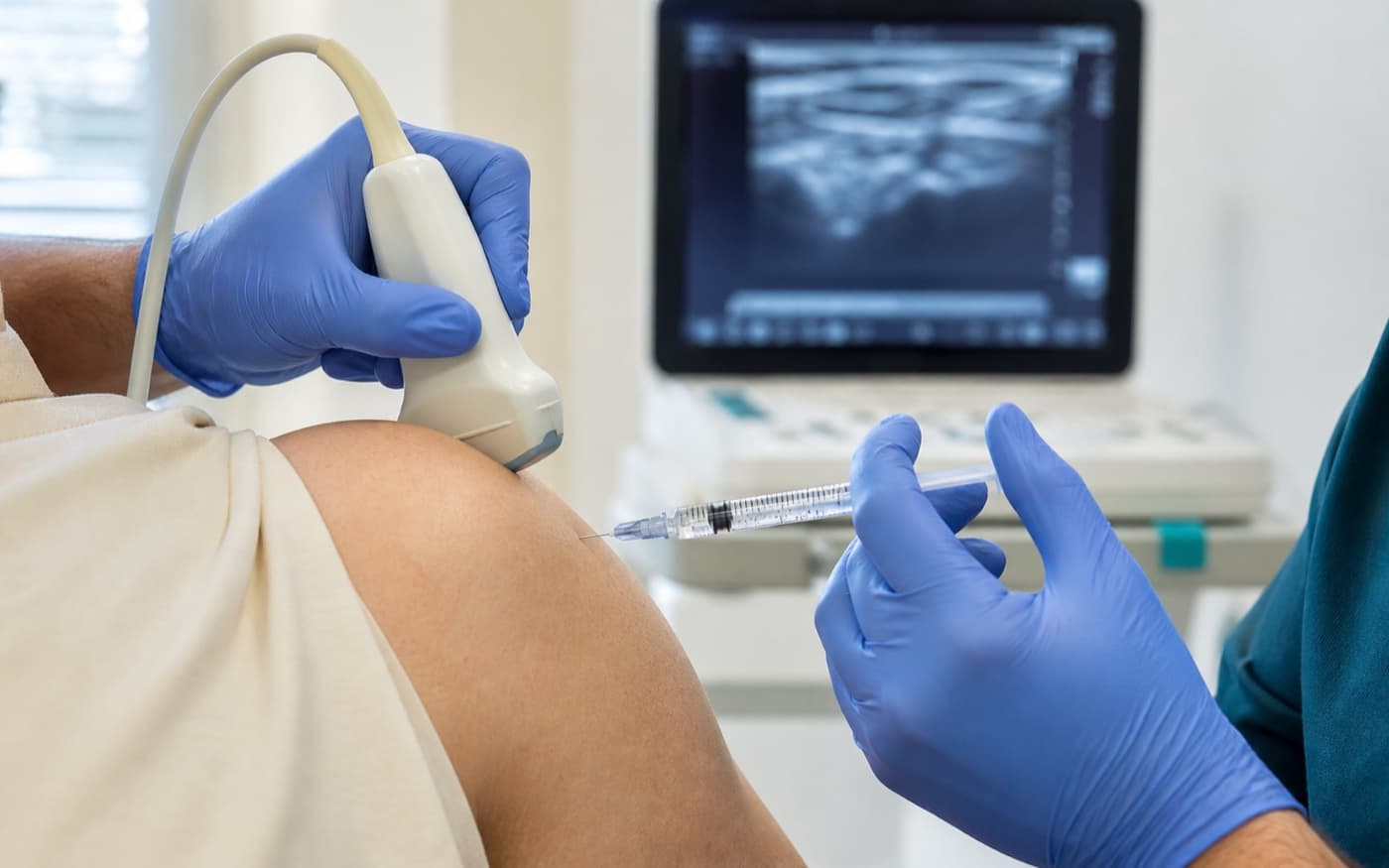
A solution, usually dextrose (a sugar) mixed with a local anesthetic like lidocaine, is injected into painful, weakened connective tissues (ligaments, tendons).
The solution acts as a mild irritant, causing localized, controlled inflammation, unlike cortisone which suppresses it. See cortisone injection in Edmonton for the treatment that works the other way.
This inflammation signals the body to send repair cells, promoting the production of new collagen and strengthening the tissues, which stabilizes the joint and reduces pain.
What it treats
Prolotherapy is used for musculoskeletal problems where the tissue itself has become weak or unstable rather than simply inflamed.
- Chronic joint and ligament pain
- Tendon strains and sprains
- Joint instability
- Chronic arthritis
Advantages of prolotherapy
- Pain reduction: some people who have used prolotherapy report a noticeable reduction in their pain after their injections.
- Limited recovery time: temporary pain, swelling or bruising can happen, and rare complications are still possible.
- Can be used with other treatments: you should also be able to use prolotherapy in addition to other treatments and techniques to manage your pain, but make sure to talk to your provider before starting it.
Your prolotherapy appointment
Before the appointment
Do not stop a prescribed medicine on your own. Before the injection, ask the clinic and the clinician who prescribed it what to do. This is especially important for aspirin, prednisone, other steroids and blood thinners. The clinic may ask some patients to pause non-prescription anti-inflammatory medicine, such as ibuprofen or naproxen, for two days before and five days after treatment.
During the appointment
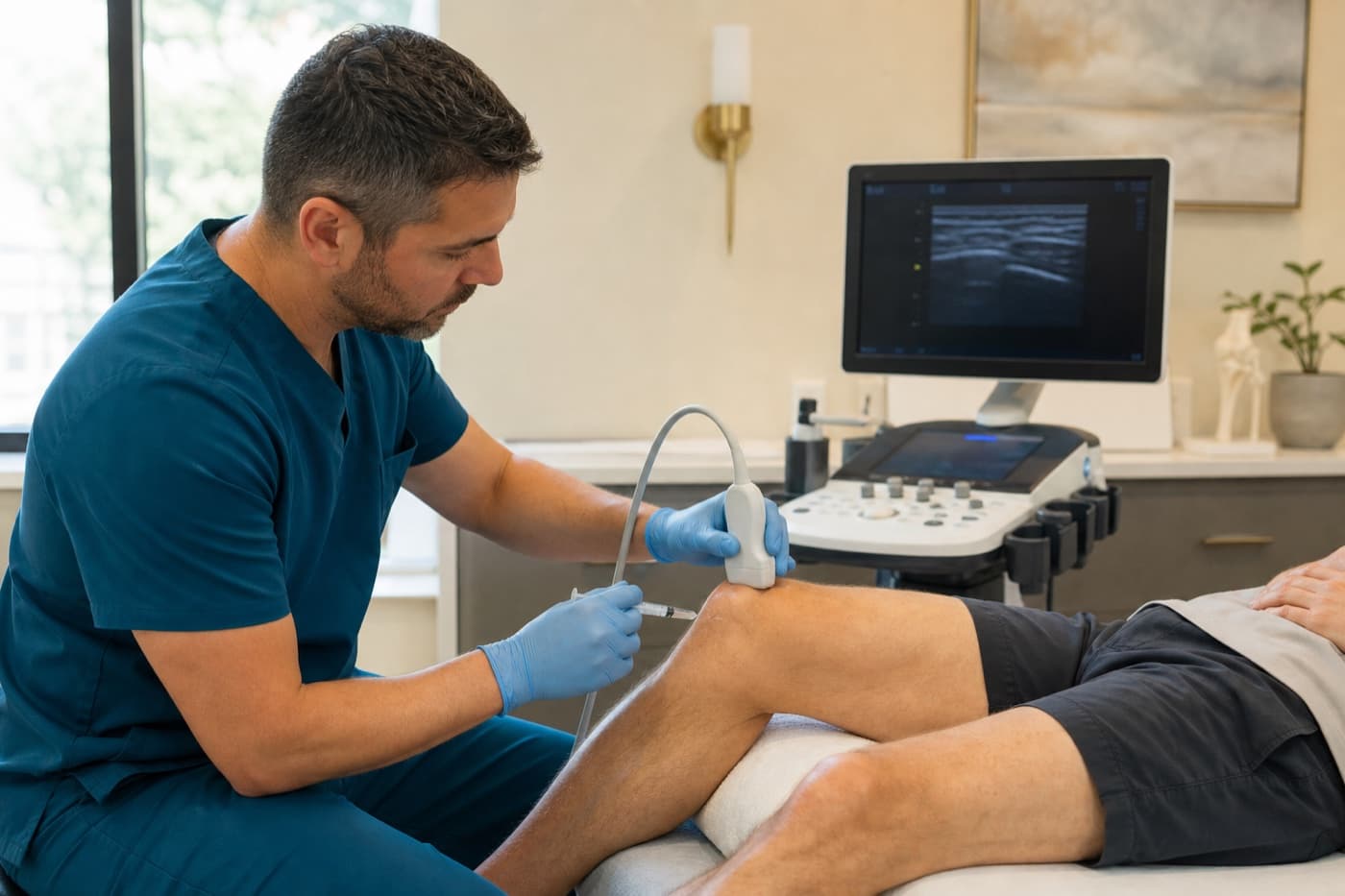
The doctor may administer a single injection or a series of injections depending on the region of the body. Sometimes ultrasound guidance is used to locate the area to be injected.
After the appointment
Depending on the area treated and the number of injections, most patients can return to usual activities during the next day to 2 days. Approved medications or acetaminophen (Tylenol) may be taken for discomfort following injections. Most people can drive after the procedure but occasionally some people are very prone to faintness, so if you are, please arrange for someone to drive you home after the treatment.
Watch for signs of infection, including increasing pain, redness and swelling that lasts more than 48 hours. Do not use a bathtub or hot tub for two days, however you may shower. You may experience some bruising on the site.
Safety and when to get help
Prolotherapy can cause temporary pain, swelling or bruising at the injection site. Rare complications can include bleeding, infection, an allergic reaction or damage to a nearby nerve, joint or other tissue. Your risk depends on the area treated and your health.
If you have received a prolotherapy injection and are experiencing signs of infection, such as a fever, redness, swelling or warmth at the site of the injection, contact us right away or call your family physician.
Visit the West Edmonton clinic
The clinic is on 118 Avenue in West Edmonton. People visit from Edmonton and the surrounding areas. Tell the clinic if driving, stairs or sitting makes your pain worse. That can help staff plan a safer visit and give you useful arrival details.
Frequently asked questions
How often are prolotherapy treatments given?
Prolotherapy treatments occur at intervals usually every 4 to 6 weeks. The number of sessions depends on the area treated and how you respond.
What do I need to avoid before prolotherapy?
Do not stop a prescribed medicine on your own. Ask the clinic and the clinician who prescribed it what to do, especially for aspirin, prednisone, other steroids and blood thinners. Some patients may be asked to pause non-prescription ibuprofen or naproxen for two days before and five days after treatment.
Can I drive home after prolotherapy?
Most people can drive after the procedure. Occasionally some people are very prone to faintness, so if you are, arrange for someone to drive you home.
How is prolotherapy different from a cortisone injection?
Prolotherapy causes a small, controlled amount of inflammation so the body repairs the tissue. A cortisone injection does the opposite and suppresses inflammation to calm a painful area.